- Home »
- Nepal »
- Trekking in Nepal »
- Annapurna Trekking »
- Annapurna Base Camp Trek
.jpg)
Overview & Highlights
- Based On 23 Reviews
Trip Facts
- AccommodationTea House
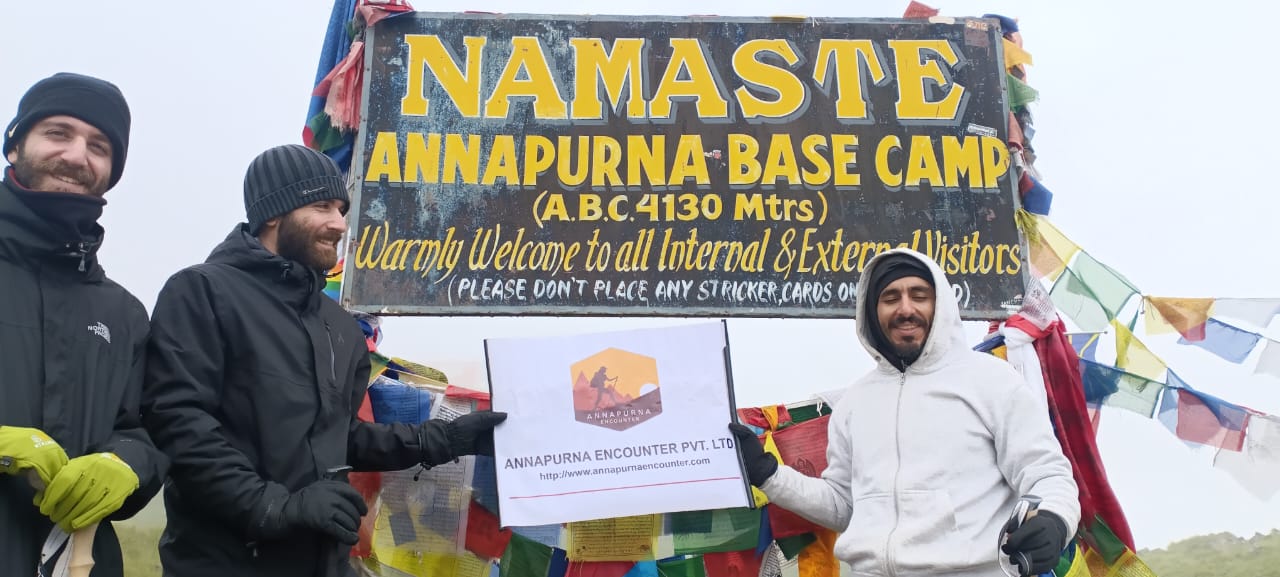
- Max Altitude4,130 m / 13, 629 ft
- Best SeasonSpring & Autumn
- Trip GradeModerate
- MealsAll inclusive
- Group Size2-15
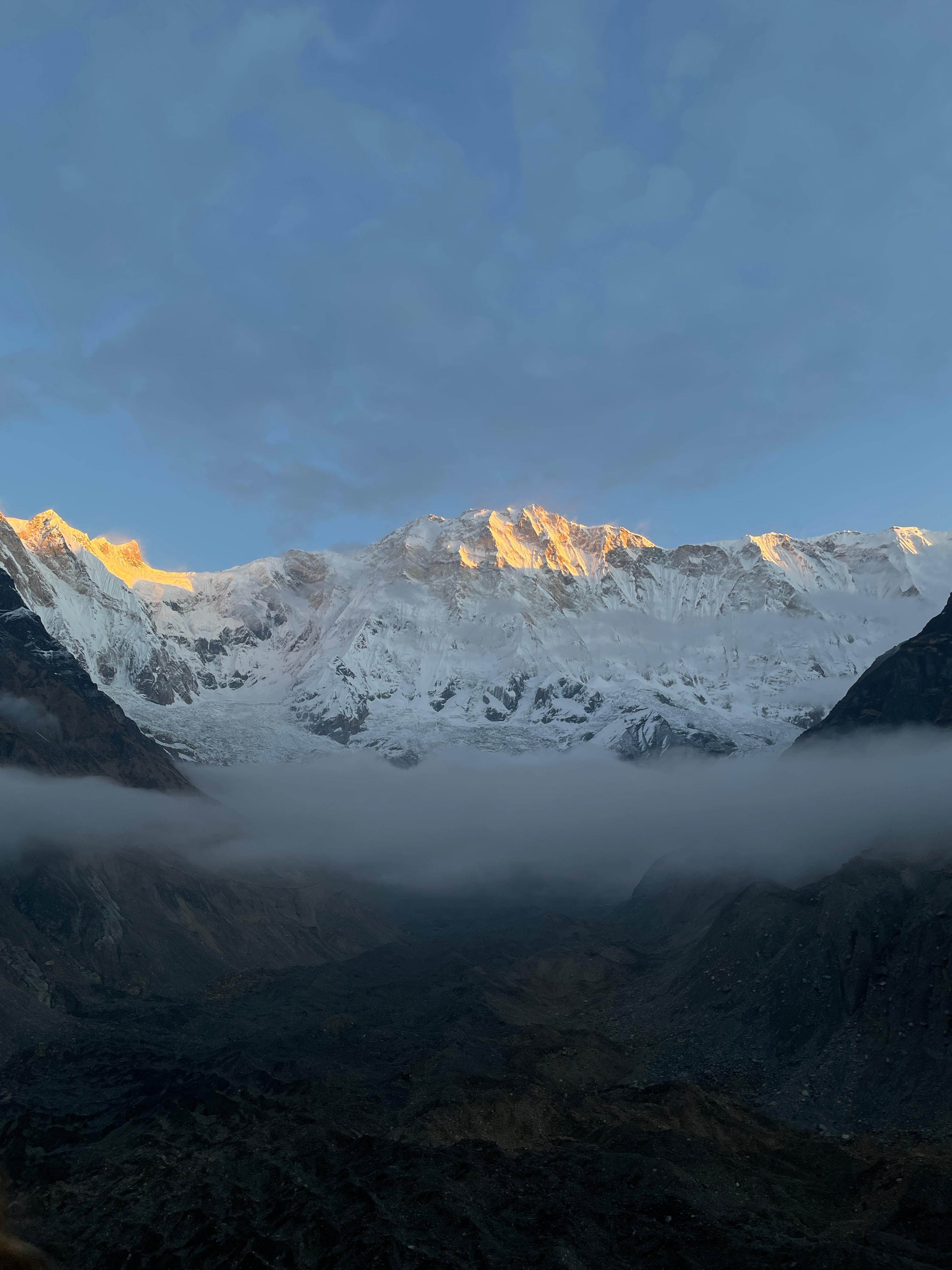
Annapurna Base Camp Trek is one of Nepal's most iconic adventures, taking you deep into the heart of the Annapurna Sanctuary. Surrounded by towering peaks—including Annapurna I (8,091m), Machhapuchhre (6,993m), and Hiunchuli (6,441m)—this trek blends breathtaking Himalayan panoramas with rich cultural immersion and natural hot springs.
Whether you're a seasoned trekker or a passionate nature lover, the Annapurna Base Camp (ABC) Trek offers an unforgettable experience. Walk through lush rhododendron forests, terraced fields, and traditional Gurung and Magar villages, all while ascending to a spectacular altitude of 4,130 meters.
Trip Highlights
- Reach the base camp of the 10th highest mountain in the world – Annapurna I
- Witness sunrise over Machhapuchhre and Annapurna South from ABC
- Enjoy a rejuvenating dip in the natural hot springs of Jhinu Danda
- Explore the diverse flora and fauna of the Annapurna Conservation Area
- Discover the vibrant culture and hospitality of local Gurung and Magar communities
- Scenic drive or flight to Pokhara, Nepal’s lake city and adventure hub
Why the Annapurna Base Camp Trekking is Truly Special
A Legendary Route to the Heart of the Himalayas
The ABC Trek leads you into the Annapurna Sanctuary, a glacial basin surrounded by a ring of towering peaks above 7,000 meters, culminating in Annapurna I (8,091m)—the 10th highest mountain on Earth. The path to the sanctuary is more than a trail—it’s a portal into the spiritual and natural heart of Nepal.
Each bend in the trail reveals a new vista: shimmering waterfalls cascading from sheer cliffs, terraced fields blanketed in green, and ethereal sunrises painting the snow-capped Himalayas in gold and crimson. Few places on Earth offer such a dynamic and layered experience in under two weeks.
The Annapurna Base Camp height is 4,130 meters (13,550 feet), making it a suitable altitude for trekkers seeking adventure without the extremes of high-altitude climbing.
The Annapurna Base Camp trekking difficulty is considered moderate, suitable for anyone with average fitness and determination. Prior trekking experience is helpful but not essential.
Major Highlights of the Trek
1. Himalayan Panoramas Unlike Anywhere Else
Standing at Annapurna Base Camp, you're encircled by giants:
- Annapurna I (8,091m) – the expedition that changed mountaineering forever
- Machhapuchhre (Fishtail) (6,993m) – a sacred, unclimbed peak shrouded in myth
- Annapurna South, Hiunchuli, Gangapurna, and distant views of Dhaulagiri (8,167m)
The scale is surreal. The silence is powerful. The feeling? Indescribable.
2. Rich Cultural Tapestry
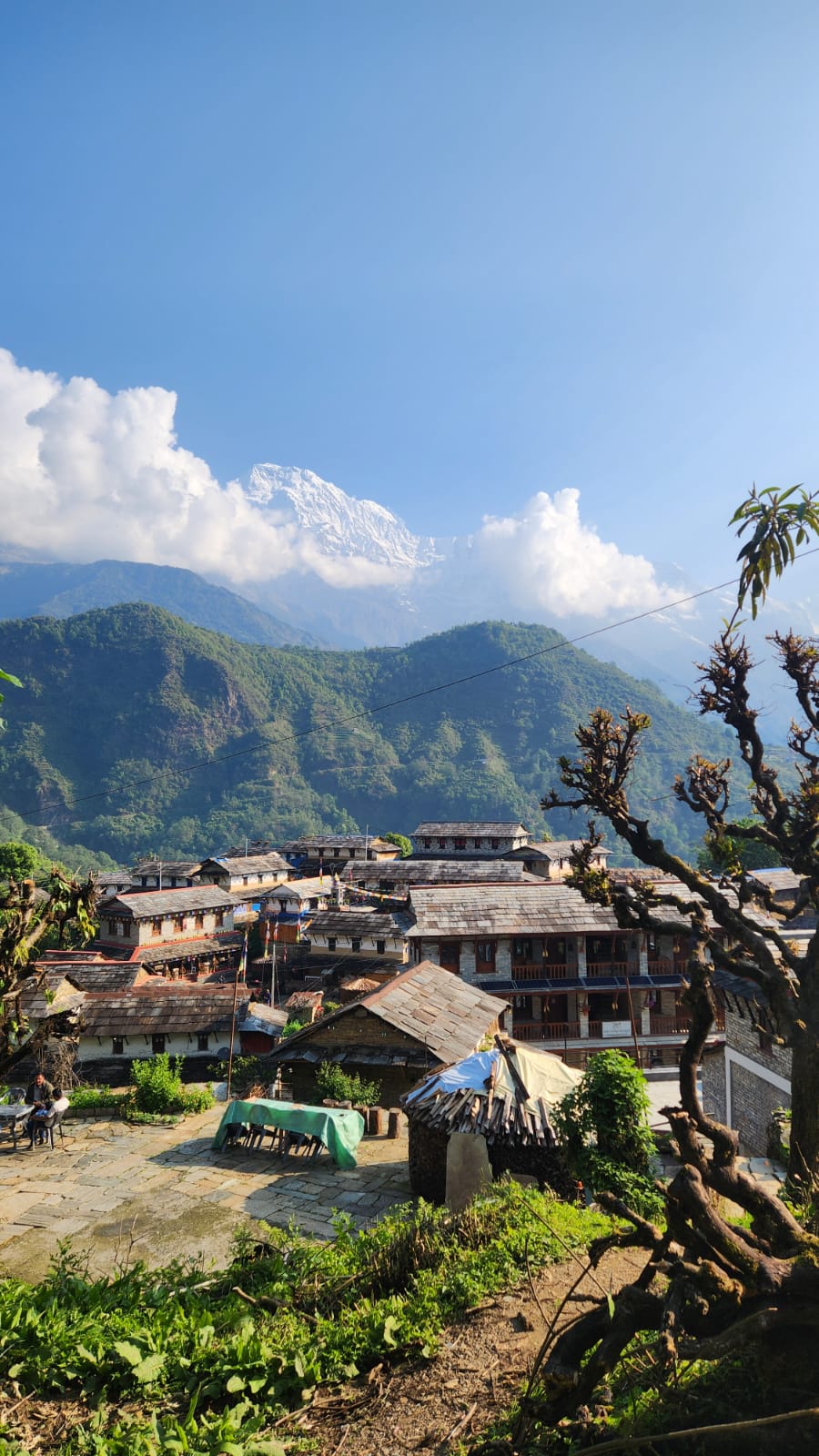
As you pass through traditional Gurung and Magar villages like Ghandruk, Chhomrong, and Sinuwa, you’ll witness a way of life preserved through generations. The Gurungs, many of whom have served in the British Gurkha army, are known for their hospitality, humility, and strength.
Cultural encounters include:
- Authentic local meals—dal bhat, gundruk soup, millet roti
- Traditional architecture—stone houses, slate roofs, prayer flags
- Festival celebrations—especially during Dashain or Tihar (if you visit in autumn)
This isn't just sightseeing—it's genuine cultural immersion.
3. Biodiversity and Dramatic Ecosystems
From subtropical forests at lower elevations to alpine tundra near the base camp, the ABC trail crosses multiple ecological zones. Highlights include:
- Rhododendron forests (especially in spring)
- Bamboo groves and fern-lined river valleys
- Langurs, Himalayan tahrs, blue sheep, and diverse birdlife like Danphe (Nepal’s national bird)
You’re trekking through the Annapurna Conservation Area Project (ACAP)—Nepal’s first and largest conservation area. Every step supports local eco-tourism and biodiversity protection.
Interact Respectfully with Locals
- Say Namaste with hands together.
- Dress modestly in villages.
- Ask before taking photos.
- Support local teahouses and artisans.
4. Natural Hot Springs at Jhinu Danda
On your way back from base camp, treat your muscles to a rejuvenating dip in the natural thermal pools at Jhinu Danda, nestled beside the Modi Khola river. It's a luxury you won’t expect—and won’t forget.
How Long is the Trek and What’s the Route?
The Annapurna Base Camp trek 7 days itinerary is a popular choice for those short on time yet eager to witness the Himalayan majesty. It condenses the route with longer trekking hours and requires moderate fitness. For faster-paced adventurers, a customized ABC trek itinerary 5 days is also possible, typically starting from Ghandruk and cutting shorter via Jhinu and Bamboo.
However, the standard Annapurna Base Camp trek itinerary spans 9 to 12 days, starting and ending in Pokhara.
Sample Route (12 Days):
- Kathmandu Pokhara (by drive or flight)
- Drive to Nayapul, trek to Tikhedhunga
- Trek to Ghorepani
- Hike to Poon Hill (sunrise view), trek to Tadapani
- Trek to Chhomrong
- Trek to Dovan
- Trek to Deurali
- Trek to Annapurna Base Camp
- Trek down to Bamboo
- Trek to Jhinu Danda (hot springs)
- Trek to Siwai, drive to Pokhara
- Return to Kathmandu
This itinerary can be customized based on your pace, preferences, or additional destinations (e.g., Mardi Himal or Ghandruk loop).
The Annapurna Base Camp trek distance is approximately 67–70 kilometers round trip, depending on the route variations.
The Annapurna Base Camp trekking route follows the Modi Khola river valley through forests, suspension bridges, ridges, and glaciers, leading into the high-altitude sanctuary.
Depending on your pace and chosen route, itineraries range from 7 to 12 days, with shorter 5–6 day options from Pokhara available for fit and acclimatized trekkers. The trek is moderately graded, with daily walks of 5–7 hours, steady ascents, and occasional long stair sections. Best seasons are spring (March–May) and autumn (September–November), when weather is stable and mountain views are crystal clear.
Other Route Options
7 Days Annapurna Base Camp trek : Balanced pace, popular for those short on time.
8 Days Annapurna Base Camp trek from Pokhara: Begins directly from Pokhara, cutting out extra transfers.
5–6 Days Annapurna Base Camp trek Fast Track Option: From Pokhara for very fit, acclimatized trekkers seeking a quick adventure.
Each route passes through highlights like Chhomrong, Himalaya, Deurali, and the famous Machhapuchhre Base Camp (MBC) before reaching ABC itself.
Annapurna Base Camp Trek Best Time: Season-by-Season Guide
| Season | Highlights | Considerations |
|---|---|---|
| Spring (Mar-May) | Blooming rhododendrons, pleasant temperatures | Slightly hazy skies |
| Autumn (Oct-Nov) | Clear mountain views, festive atmosphere | Most crowded season |
| Winter (Dec-Feb) | Snowy trails, fewer trekkers, peaceful | Cold at higher altitudes |
| Monsoon (Jun-Sep) | Lush greenery, fewer tourists | Slippery trails, leeches, cloud cover |
Each season offers a different experience—talk to us to find the best fit for your style.
What to Pack for ABC Trek (Expanded Checklist)
Clothing
- Moisture-wicking base layers
- Insulated jacket (down or synthetic)
- Waterproof shell jacket and pants
- Warm fleece and thermal leggings
- Trekking pants, shorts, shirts (quick-dry)
- Woolen hat, sun hat, gloves, neck gaiter
Footwear
- Broken-in trekking boots (ankle support)
- Lightweight camp shoes
- Wool or synthetic trekking socks
Gear
- Backpack (40–50L) with rain cover
- Sleeping bag (rated to -10°C or colder)
- Trekking poles
- Headlamp with extra batteries
- Water bottles/hydration system
- Microspikes (for winter treks)
Personal Essentials
- Sunscreen, lip balm (SPF 30+)
- Sunglasses (UV protection)
- Quick-dry towel
- Biodegradable toiletries
- First aid kit, blister care, water purification tablets
- Camera, journal, power bank
Safety Measures During the Trek
- All guides are trained in high-altitude first aid.
- We carry a pulse oximeter and basic medical kit.
- Emergency helicopter evacuation is available (covered by insurance).
- Mobile networks are available in most villages.
Why Trek with Annapurna Encounter?
We’re not just guides—we’re your partners in adventure. Here’s what sets us apart:
Professionalism & Safety
Our guides are licensed, trained in first aid, and fluent in English. They monitor your health daily and are experienced in handling altitude-related risks.
Personalized Service
We customize treks based on your timeframe, interests, and fitness level. Want to add a helicopter ride back? Need a private group experience? We’ve got you.
Sustainability-Focused
We practice eco-friendly trekking—no single-use plastics, responsible waste management, and support for local homestays and teahouses.
Transparent Pricing
There are no hidden fees. Our packages include permits, transportation, guide/porter services, meals, accommodations, and more.
We also provide a detailed Annapurna base camp trekking map to help you visualize your journey and prepare accordingly.
Village Facilities on Route
| Village / Stop | Altitude (m) | Wi-Fi | Hot Shower | Charging | Mobile Signal |
|---|---|---|---|---|---|
| Ghandruk | 1,940 | Yes (USD 2–3) | Yes (USD 2) | Yes (USD 1–2) | NTC/Ncell |
| Chhomrong | 2,170 | Yes | Yes (USD 2–3) | Yes (USD 2–3) | NTC/Ncell |
| Himalaya | 2,920 | Limited | No | Limited solar (USD 3–4) | Weak |
| Deurali | 3,200 | Limited | Yes (USD 3–4) | Limited solar (USD 3–4) | Weak |
| Annapurna Base Camp | 4,130 | Patchy (USD 3–5) | Bucket shower (USD 4–5) | Limited solar (USD 3–5) | Very weak / none |
Ready to Begin Your Himalayan Journey?
Annapurna Base Camp Trek is a life-changing adventure. It’s about more than reaching a destination—it’s about connecting with nature, embracing new cultures, and discovering a deeper part of yourself along the way.
Check out our Annapurna Base Camp Trek reviews to see why hundreds of trekkers choose us every year.
Book your trek with Annapurna Encounter today, and let us guide you to the heart of the Himalayas—safely, sustainably, and memorably.
— ? Annapurna Base Camp Trek Cost– Group Pricing (Per Person in USD)
| Group Size | Budget Package | Standard Package | Premium Package |
|---|---|---|---|
| 1 Person (Solo) | $550 | $1199 | $2,500 |
| 2 People | $500 | $1050 | $2,300 |
| 3–7 People | $500 | $950 | $2,100 |
| 8–12 People | $500 | $880 | $1,950 |
| 13–20 People | $350 | $850 | $1,800 |
— Budget = basic trek only (transport, permits, guide, no meals, no porter, no hotels).
— Standard = balanced option (meals, porter, 3 — KTM & Pokhara hotels).
— Premium = luxury upgrade (flights, 5 — hotels, better lodges, cultural extras).
Itinerary
Explore the day-by-day plan for your journey.
Our Annapurna Encounter Trek’s airport representative will receive you outside the terminal hall. Please look for our Treks play card. He will transfer you to the hotel, introduce your trekking guide, and check the necessities. In the afternoon, stroll around the colorful market of the bustling city of Thamel.
Food
Breakfast
Accommodation
Hotel
Elevation
1300 m.
After breakfast, the trail follows the route of scattered trees and bushes to the village of Tolka. Next, we climb steeply for two hours to reach Deorali. This amazing hilltop village exhibits the extended view of the Annapurnas and Dhaulagiri (8,167m/26,796ft – the highest peak in western Nepal). It also offers the tantalizing view of Pokhara valley and Phewa Lake to the south.
We then climb down through the lush forest and farmland to Pothana and later down to the large village of Dhampus. A further downhill walk takes us to Phedi – the Pokhara – Baglung Highway. A car will be waiting to transfer you back to your hotel in Pokhara. Enjoy afternoon at Pokhara.
Food
BL
Accommodation
Hotel
Elevation
910 m.
After breakfast, drive back to Kathmandu via tourist bus. This scenic and adventurous drive offers the great glimpses of rural Nepal and mid hill scenery.
Enjoy free day at Kathmandu or catch up on some last minute shopping or explore missed physical landmarks in Kathmandu. Join farewell dinner organized by Annapurna Encounter to celebrate the successful completion of the journey.
Food
BD
Accommodation
Hotel
Elevation
1350 m.
Your adventurous journey in Nepal comes to an end today. Our airport representative will drop you to airport approximately 3 hours before our scheduled flight.
Food
B
After breakfast, proceed for sightseeing around the famous UNESCO world heritage sites of Kathmandu. We visit Pashupatinath Temple – the sacred Hindu temple located on the bank of holy river Bagmati, Boudha Stupa – the biggest stupa architecture in Nepal and Swayambhunath Stupa – the 2,000 years old legendary Stupa perched on a the hillock.
The sightseeing tour also covers the visit to Durbar Square, Patan Durbar Square, the Krishna Temple, the Kumbheswore Temple, the Golden Temple and many more.
Food
B
Accommodation
Hotel
Elevation
1300 m.
Morning transfer to the bus station for the drive to Pokhara. on reaching Pokhara, We drive to the hotel in Lakeside, free evening to enjoy the magnificence of Lake City, Pokhara.
(if you wish to make your trek more easier you can opt for 25 minutes of flight)
Food
B
Accommodation
Hotel
Elevation
910 m.
After breakfast, we drive through the zigzag route over the mid hills to Nayapul – the starting point of the trek. After a short 15-minute walk along the banks of the Modi Khola, we reach the prosperous village of Birethanti (1,015m). It is located at the alongside of Modi Khola which carries the melt water from the Annapurna south Glacier. We then walk upstream through the cultivated fields to Syauli Bazazar, cross suspension bridge and climb admiring the great views of Machhapuchhre (fish tail), Hiunchuli and Annapurna South. Long stone staircases climb, past huge landslide leads us to the village of Ghandruk, with impressive views of the valley gorge.
Food
BLD
Accommodation
Lodge
Elevation
1950 m.
After breakfast, the trail follows the northern trail of the village and walk across the pastures to a ridge, before climbing down into a green valley and crossing a suspension bridge over the Kimrong Khola.
After lunch, we climb out the valley and walk through the forested route of rhododendron and oak to reach Chhomrong.
Food
BLD
Accommodation
Lodge
Elevation
2210 m.
After breakfast, we descend down to the Chhomrong Khola before climbing to the beautiful settlement of Sinuwa. Next, the trail enters into the upper Modi Khola valley through the magical forest of cane, rhododendron, and oak. It then makes few ascend and descend before reaching the village of Bamboo (2,310m/7,580ft) located on the bank of rive – a perfect spot for lunch. After lunch, we ascend via the forested route to reach Dobhan and cross the several avalanche chutes before reaching the small settlement of Himalayan Hotel.
Food
BLD
Accommodation
Lodge
Elevation
2920 m.
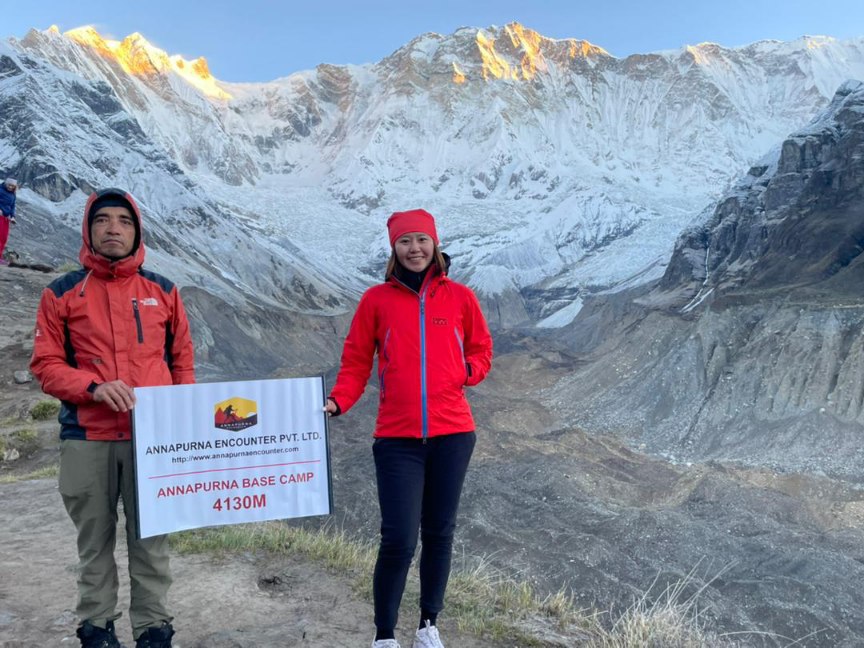
As the altitude rises, the lush vegetation gives way to the alpine scrub and grasses. The trail climbs to Hinku cave, Deurali and then Machhapuchhre Base Camp. It is actually not a base camp because climbing Mt. Machhapuchhre is not permitted. Since it is totally surrounded by mountains, this area is known as Annapurna Sanctuary. Two hours trek form Machhapuchhre Base Camp via grassy slopes leads us to the Annapurna Base Camp (ABC) at an elevation of 4,130m. Here we get unobstructed view of Annapurna ranges.
Food
BLD
Accommodation
Lodge
Elevation
4130 m.
Wake up early in the morning to enjoy the unforgettable views and photo opportunities from the rim of the glacier. A circular view of Hiunchuli, past Annapurna South and vast ice wall topped by Annapurna I (8,097m/26,566ft), Khangsar Kang, Gangapurna, Annapurna III and Machhapuchhre. After breakfast, we retrace our step slowly down to Sinuwa for a more comfortable night.
Food
BLD
Accommodation
Lodge
Elevation
2360 m.
After breakfast, we take a route that descends to the Chhomrong Khola and then climb via stair back to Chhomrong. The trail then climb down steeply to Jhinu Danda for lunch. We also soothe at natural hot spring to relax our tired muscles. Later, we cross the Modi Khola River at New Bridge before climbing steeply to Landruk with great view behind.
Food
BLD
Accommodation
Lodge
Elevation
1565 m.
Trip Cost & Services
Budget Package Service Includes
- Accommodation
- Twin-sharing tea house stays during trek
- Transport
- Tourist bus: Kathmandu ↔ Pokhara
- Local jeep/bus transfers to trek start point (Nayapul) and return
- Meals
- Not included – trekkers pay directly at tea houses
- Guide & Porter
- Licensed, English-speaking trekking guide
- No porter service (available at extra cost)
- Permits & Fees
- Annapurna Conservation Area Permit (ACAP)
- TIMS card
- Extras
- Pre-trek briefing
- Basic first aid kit with guide
- Transport
- Twin-sharing tea house stays during trek
Budget Package Service Excludes
- Meals in Kathmandu, Pokhara & during trek
- Hotel accommodation in Kathmandu & Pokhara
- Porter service (optional extra)
- Personal trekking gear (jackets, poles, sleeping bag, etc.)
- Hot showers, Wi-Fi, charging in lodges (paid locally)
- Travel insurance (mandatory, must cover high altitude)
- International airfare & Nepal visa fees
- Alcohol, bottled water, snacks
- Tips for guide, porter, driver
- Costs from delays/weather/natural disasters
Standard Package Service Includes
- Accommodation
- 2 nights in 3-star hotel in Kathmandu with breakfast
- 2 nights in 3-star hotel in Pokhara with breakfast
- Twin-sharing tea house accommodation during trek
- Transport
- Tourist bus: Kathmandu ↔ Pokhara
- Private/local jeep transfers to trek start/return points
- Airport transfers in Kathmandu
- Meals
- Breakfast in Kathmandu & Pokhara
- All meals during trek (breakfast, lunch, dinner with tea/coffee)
- Guide & Porter
- Licensed English-speaking trekking guide
- Porter service (1 porter for every 2 trekkers, 15–20 kg)
- Permits & Fees
- Annapurna Conservation Area Permit (ACAP)
- TIMS card
- Extras
- Pre-trek briefing
- First aid kit with oximeter
Standard Package Service Excludes
- Lunch & dinner in Kathmandu & Pokhara
- Personal trekking equipment (rentable in Kathmandu)
- Hot showers, Wi-Fi, charging in lodges (paid locally)
- Travel insurance
- International airfare & Nepal visa fees
- Alcohol, bottled water, snacks
- Tips for guide, porter, driver
- Costs due to delays/weather
Premium Package Service Includes
- Accommodation
- 2 nights in 4–5-star hotel in Kathmandu with breakfast
- 2 nights in 4–5-star hotel in Pokhara with breakfast
- Best available lodges during trek (attached bathrooms where possible)
- Transport
- Flight: Kathmandu ↔ Pokhara (both ways)
- Private jeep transfers to trek start/return points
- Luxury private transfers in Kathmandu
- Welcome & farewell dinners in Kathmandu
- Meals
- All meals during trek with wider menu choices
- Breakfast in Kathmandu & Pokhara
- Welcome & farewell cultural dinners
- Guide & Porter
- Senior trekking guide with high-altitude experience
- Porter service (20–25 kg allowance per porter)
- Staff insurance included
- Permits & Fees
- Annapurna Conservation Area Permit (ACAP)
- TIMS card
- Extras
- Loaner trekking gear (sleeping bag, down jacket, trekking poles)
- Emergency evacuation coordination (insurance required)
- Daily health monitoring with oximeter
- Kathmandu & Pokhara cultural sightseeing assistance
Premium Package Service Excludes
- International airfare
- Nepal visa fees
- Comprehensive travel insurance
- Personal expenses (souvenirs, laundry, phone calls)
- Alcohol, bottled water, soft drinks
- Tips for guide, porter, driver
- Optional upgrades (helicopter return, single supplement)
- Costs due to delays/weather/natural disasters
Altitude & route map
Select a preview for a full-width, zoomable view.
Annapurna Base Camp Trek Altitude Profile
Trip visual
Frequently Asked Questions
Helpful answers for planning this trip with confidence.
The Annapurna Base Camp trek typically takes around 7-14 days to complete, depending on the itinerary and the individual's pace.
The best time to go on the Annapurna Base Camp trek is from September to November and from March to May, during the autumn and spring seasons. The weather is clear and the views of the mountains are at their best.
The Annapurna Base Camp trek is considered a moderate to challenging trek. It involves hiking through rugged terrain, steep inclines, and high altitudes, so a moderate level of fitness is required.
Charging facilities are available at some of the teahouses along the trek, but they may be limited. It's best to bring a portable charger or extra batteries for your electronic devices.
There are a few ATMs available in the towns and villages along the trek, but they may not always be reliable. It's best to withdraw enough cash before starting the trek.
Food and supplies can be purchased at teahouses along the trek. However, it's best to bring some snacks and energy bars as they may not always be available.
Accommodation during the Annapurna Base Camp trek is typically in the form of teahouses or guesthouses. The facilities can vary, but most will have basic amenities such as a bed, pillow, and blanket. Some teahouses have shared bathrooms, while others have private bathrooms.
Yes, the Annapurna Conservation Area Permit (ACAP) is required for the Annapurna Base Camp trek. It can be obtained at the Kathmandu or Pokhara immigration office or through a trekking agency. The TIMS card (Trekkers' Information Management System) is also required for the trek.
Annapurna Base Camp trek can be challenging due to the high altitude and rugged terrain, so it may not be suitable for very young children. However, older children who are physically fit and able to handle the altitude may be able to complete the trek with proper preparation and proper guidance.
The cost of the Annapurna Base Camp trek can vary depending on the itinerary, the services included, and the time of year. The cost typically includes accommodation, meals, permits, and transportation to and from the trailhead. The cost can range from $700 to $1000 or more.
Along the Annapurna Base Camp trek, you will find teahouses and guesthouses that serve a variety of local and international dishes. The menu typically includes options such as dal bhat (lentil soup and rice), momos (dumplings), and noodle dishes. Vegetarian and vegan options are also available.
Internet access can be limited along the Annapurna Base Camp trek, as the signal strength can be weak in the mountains. Some teahouses and guesthouses may have Wi-Fi, but it's best to not rely on it. It's better to enjoy the trek without being connected to the internet.
Traveller Useful Information
Practical details to help you prepare before departure.
The trek rises from 820m (Pokhara) to 4,130m (ABC). Our itinerary includes gradual ascents to help you adjust safely.
Tips:
- Drink 3–4 liters of water per day.
- Walk slowly, avoid alcohol.
- Let your guide know if you feel headaches or dizziness.
We handle all permit arrangements:
- Annapurna Conservation Area Permit (ACAP): NPR 3,000
Please bring digital passport photos and a copy of your passport.
Client Reviews
23 verified experiences from this trip
Mason Lowe
United StatesBest Price and Outstanding Guide for an Unforgettable ABC Trek
Rhys Scarrott
United KingdomBest Services for Solo Trekkers — Highly Recommended
Florence Guay
CanadaBeautiful Trek with the Best Guide and Services
Karen Tafur
PeruFirst Himalayan Trek — Stress-Free and Well-Priced
Josef Lasarow
GermanyPerfect Combination of Best Price and Professional Service
YUI TSUKAMOTO
JapanAn Unforgettable ABC Trek with Exceptional Support
YUJI IWATA
JapanGuided with Care: A Truly Enjoyable ABC Adventure
David Connolly
IrelandFamily Trek December — Best Group Package Ever
LUKAS ERIK VAN SCHAGEN
GermanyUnforgettable Trek with Personal Support
Louis M
FranceMemorable experience
Martin Kelly
United KingdomFantastic scenery backed up with Devi, my guide
Sait?? Motoharu
JapanNice Service !
Dimitris L
Greece10 days trip with trekking and safari
Onoufrios M
GreeceGreat hospitality
Scroll to explore more reviews
Similar Trips
Enjoy the popular trekking and tour packages in Nepal Himalayas. 2026.


-1.jpg)

.jpg)